In downflow (co-current) brining, brine flows down through the resin the same way water does in service. In upflow (counter-current) brining it flows up, against the service direction, so the least-exhausted resin at the bottom, the last resin water passes before your taps, is regenerated most thoroughly. Makers of upflow valves describe lower salt use for the same softening.
Side by side
| Downflow | Upflow | |
|---|---|---|
| Brine direction | Same as service | Against service |
| Common on | Many timer and older metered heads | Many newer high-efficiency heads |
| Maker claim | - | Less salt for the same softening |
Does it matter to you?
Less than capacity, flow and a metered valve do. If salt use matters, a metered valve and a correct hardness setting save more than the brining direction alone. Size the softener first.
Salt efficiency
Water Conditioning & Purification notes that salt efficiency falls as the salt dose rises: its example softener gets 4,000 grains per pound of salt at a light setting but about 1,867 at 7.5 lb per cubic foot.
Products mentioned
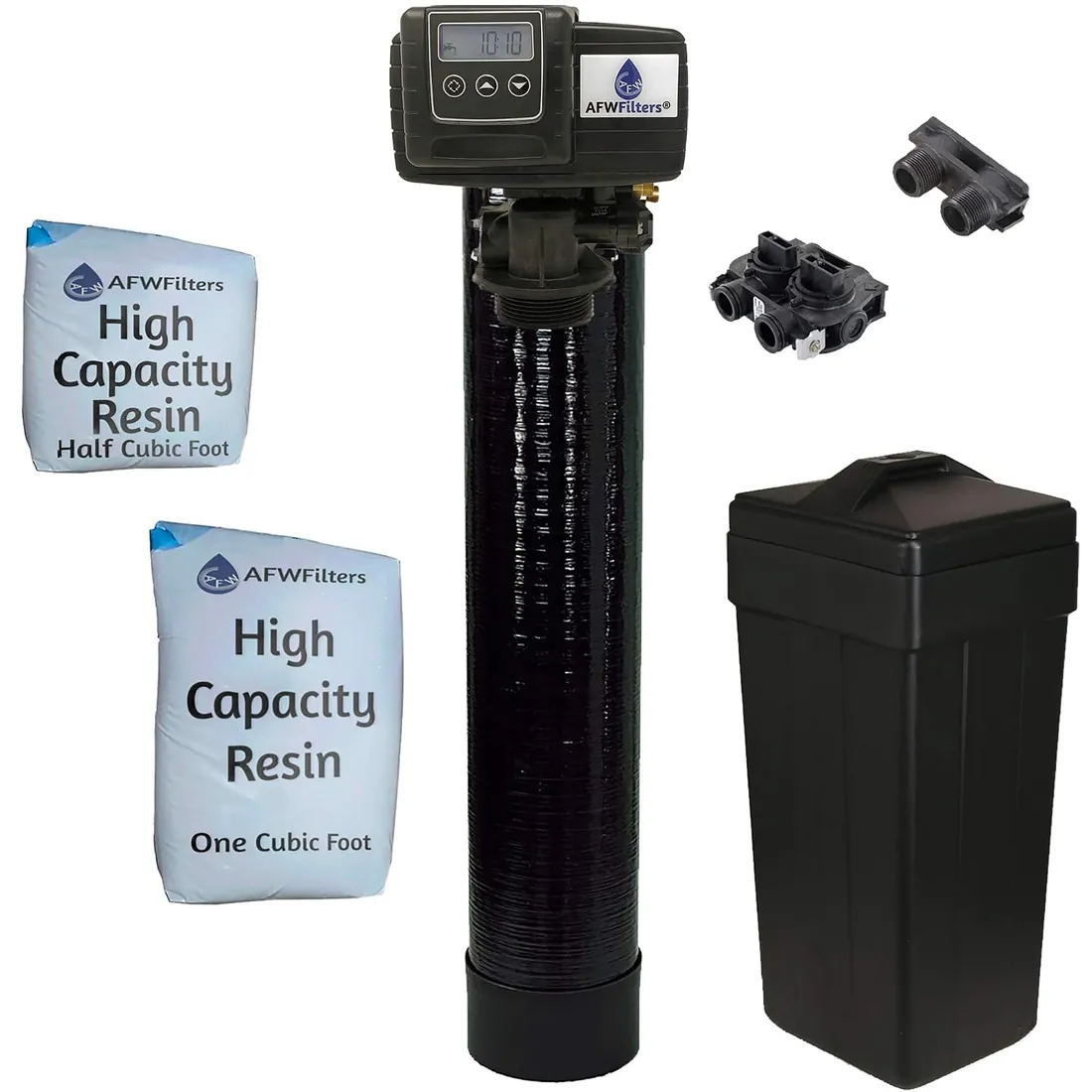
AFWFilters Fleck 5600SXT 48,000-Grain Water Softener
48,000 grains · Fleck 5600sxt
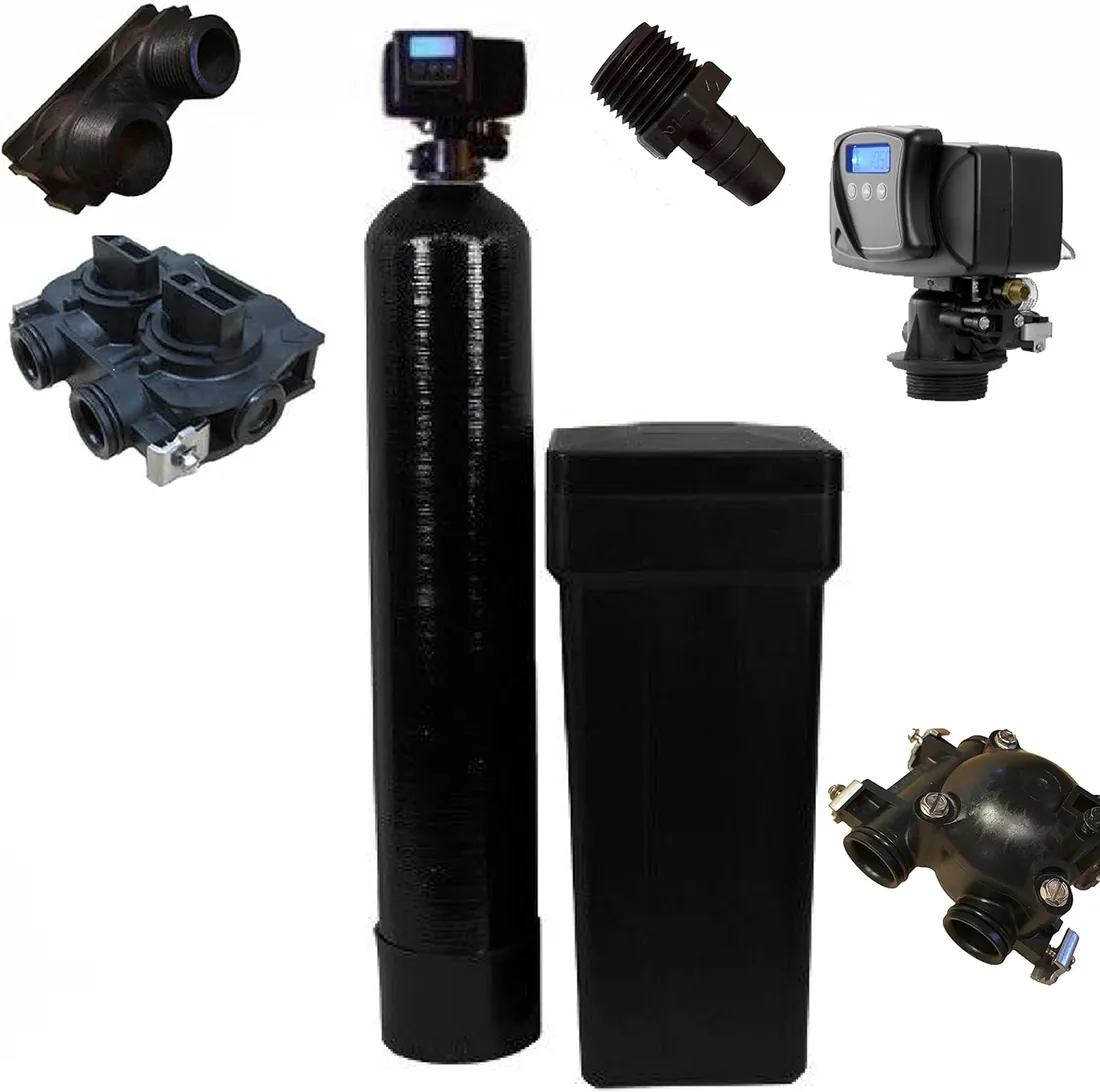
Fleck 5600SXT 48,000-Grain Water Softener
48,000 grains · Fleck 5600 SXT
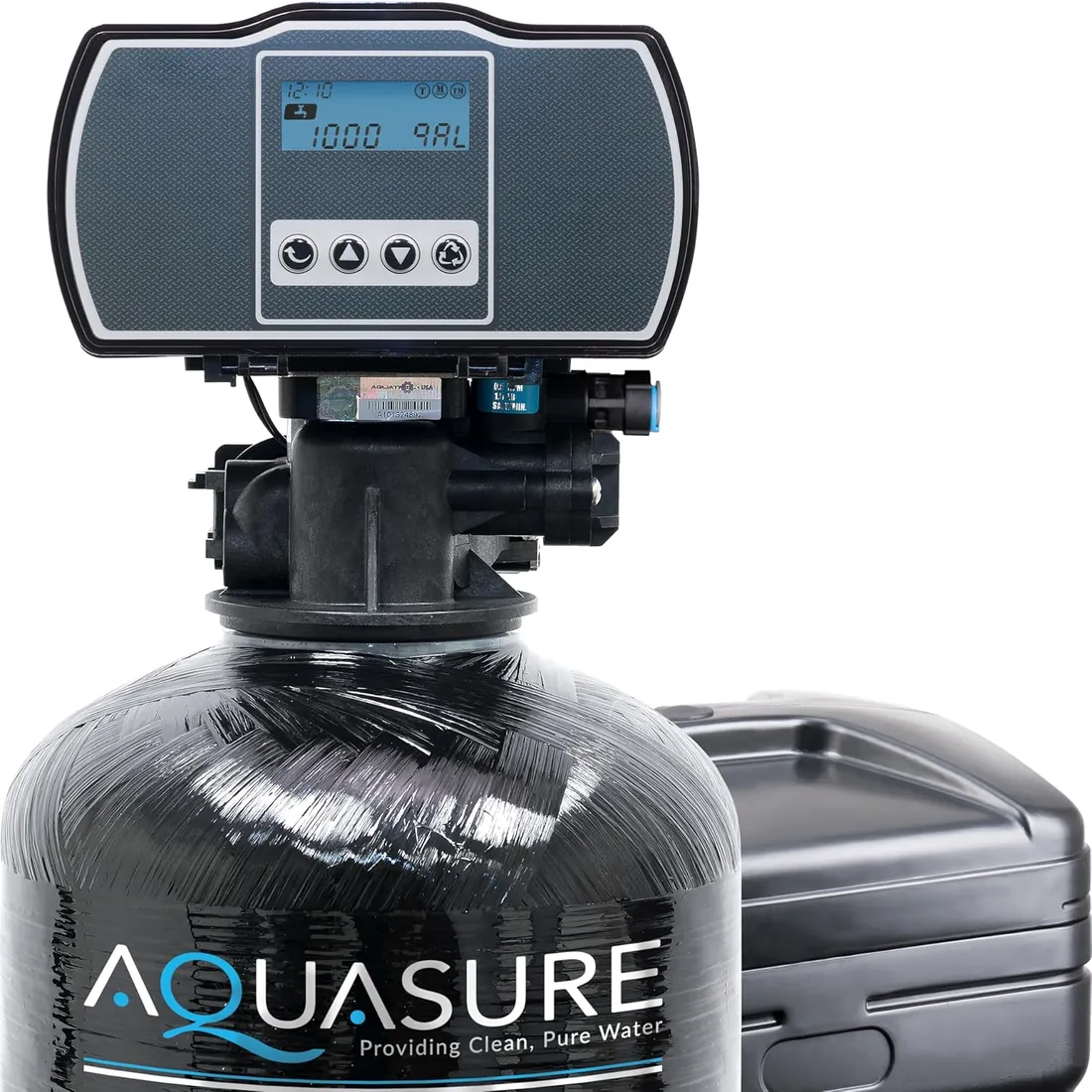
Aquasure Harmony Series AS-HS48D 48,000-Grain Water Softener
48,000 grains · 12 GPM